

A competitive advantage born of necessity
Finland is a small open economy whose geography has imposed one exceptional requirement: foreign trade must function even when the sea freezes. Most Finnish exports and imports travel by sea. Icebreakers are therefore not merely specialist vessels; they are part of the country’s economic infrastructure and security of supply.
More than a century of winter navigation has created something else as well: internationally rare high-technology expertise. Today that expertise extends far beyond building icebreakers. It includes vessel design, hull forms and hydrodynamics, electric propulsion, engines and energy systems, automation, ice testing, shipbuilding and operations.
An entire Arctic maritime technology ecosystem has emerged in Finland. Its economic significance has been easy to overlook because relatively few icebreakers are built compared with container ships, tankers or cruise ships. But this is a market where volume may not be the decisive competitive factor. Expertise that is difficult to replicate may be more valuable than production volume.
The Arctic has become strategic again
Demand for icebreakers is no longer driven only by winter navigation. The geopolitical importance of the Arctic has increased. The United States, Canada and other Western countries need greater capacity to operate in northern waters, while Russia has a substantial icebreaker fleet and China is expanding its Arctic capabilities.
This is the setting for the ICE Pact — the Icebreaker Collaboration Effort between Finland, the United States and Canada. Its aim is to combine the countries’ expertise in designing, building and equipping Arctic and polar icebreakers.
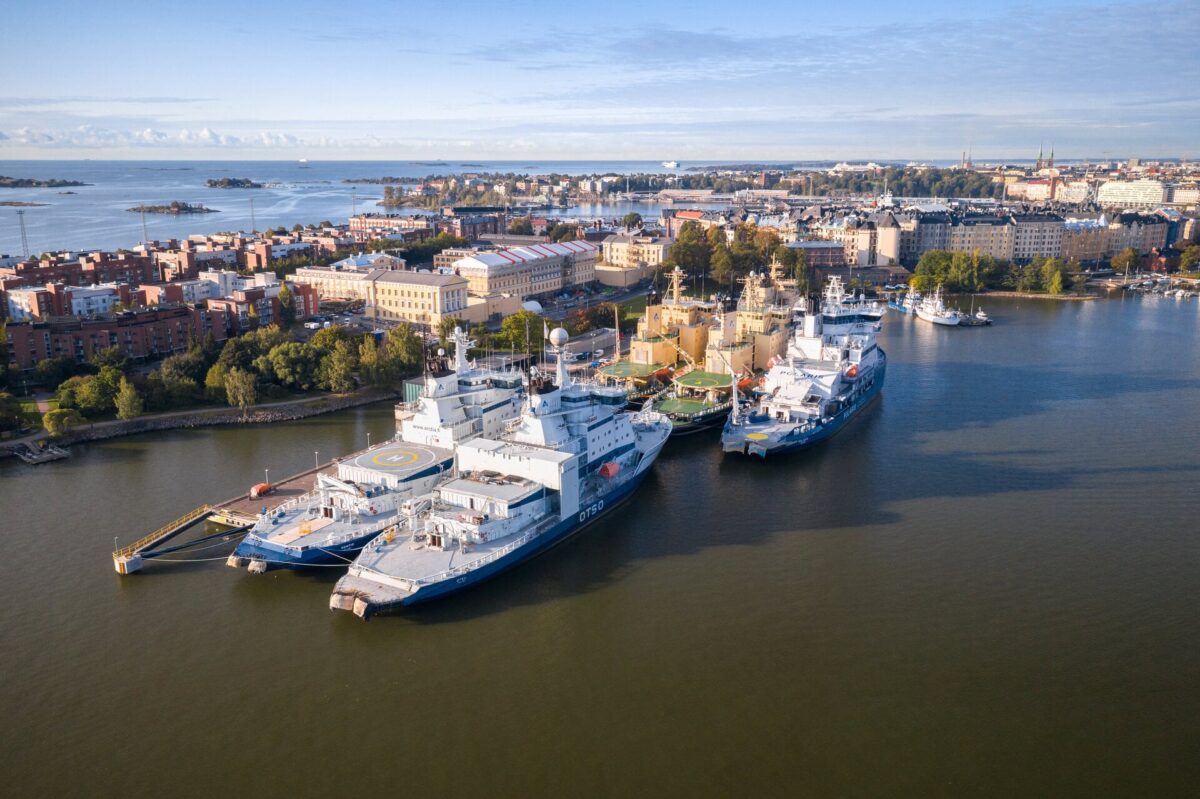
The cooperation has already become very concrete for Finland. Of the new Arctic Security Cutters being built for the U.S. Coast Guard, construction of four will begin in Finland: two in Rauma and two in Helsinki. The first major orders are no longer hypothetical. They are already here.
But where is the economic value created?
For an investor, the story becomes particularly interesting here. The easy conclusion would be that growing icebreaker demand makes Finnish shipyards attractive investments. The problem is that they are largely inaccessible to stock-market investors.
Rauma Marine Constructions is privately held. Helsinki Shipyard is owned by Canada’s Davie. Arctia, which operates Finland’s icebreakers, is state-owned. The investor therefore needs to look beyond the shipyard gate.
An icebreaker is a huge systems-integration project. Around it are design, propulsion, electrification, automation, engine and energy systems, specialist components, and decades of maintenance and modernisation. This is where an investor’s map of Finnish icebreaker expertise begins.
Investor map – where does the value chain run?
Design and Arctic engineering: Aker Arctic and Elomatic are examples of specialist Finnish expertise that can be exported regardless of where the vessel itself is ultimately built. Neither currently offers a simple direct stock-market route into the theme.
Shipyards: Rauma Marine Constructions and Davie’s Helsinki Shipyard are at the heart of Finnish icebreaker construction. Their orders can nevertheless spread economic impact across a broad domestic supplier network.
Propulsion, engines and energy systems – Wärtsilä: for a listed-equity investor, Wärtsilä is one of the clearest indirect ways to gain exposure. The company has a long history in icebreaker engines, propulsion and energy systems. Wärtsilä 31 engines, for example, have been selected for Canada’s new Polar Icebreaker.
Electric propulsion and automation – ABB: ABB’s Azipod, developed in Finland, is one of the key innovations in modern ice-going ship technology. For Canada’s Polar Max icebreaker, ABB will supply Azipod propulsion as well as a broad package of electrical, power and automation systems.
For groups as large as Wärtsilä and ABB, individual icebreakers will not determine overall earnings. But they illustrate a more important point: a significant share of an icebreaker’s economic value is created outside the shipyard’s welding halls.
What if the export product is expertise?
This may be the most interesting part of the Finnish icebreaker story. The United States wants to build future icebreakers in its own shipyards. Canada does too. At first glance, that might seem to reduce Finland’s opportunity.
It can also be viewed the other way around. If Finnish technology, design, testing, propulsion systems and other know-how become embedded in North America’s growing icebreaker industry, Finland does not need to build every vessel domestically in order to benefit from market growth.
Ship construction can be transferred. Deep expertise is much harder to transfer.
At best, Finnish companies could build long-term business in design, technology, components, systems, maintenance and lifecycle services. From an investor’s perspective, this may be more attractive than the construction of a single vessel.
An icebreaker is more than an export product for Finland
Finnish icebreaker expertise has another dimension: it also protects Finland’s own economy. When foreign trade depends heavily on maritime transport, reliable winter navigation enables industry to operate year-round.
The supply chains of forestry, metals, chemicals and many other export industries cannot stop when the Gulf of Bothnia freezes. The economic significance of icebreakers should therefore not be measured only by the euros generated by building them. Their real value also lies in the trade they make possible.
How can an investor benefit?
There is currently no single listed Finnish share through which an investor can buy the entire icebreaker theme. That may not be a disadvantage. A more useful approach is to examine the whole Arctic maritime technology value chain.
Wärtsilä and ABB are obvious listed companies to follow, but an even more interesting opportunity may eventually be found around them. Finland’s maritime supplier network contains many smaller design, automation, electrification, software and component companies.
If North American icebreaker programmes become an investment wave lasting years or even decades, the relative impact on a smaller company could be of an entirely different magnitude than on Wärtsilä or ABB.
But one basic investment principle remains: the world’s best technology does not automatically make the world’s best investment. What matters is how much of a company’s revenue and earnings are linked to the theme, how profitable that business is, and how much future growth is already reflected in the share price.
A small country’s hard-to-copy advantage
Finnish icebreaker expertise is a good example of how a small country can achieve a globally important position in a narrow field of technology. It was born from geographic necessity. Now the same expertise has become part of Western Arctic security and industrial policy.
Perhaps Finland’s opportunity is not ultimately measured by how many icebreakers Finnish shipyards build. The larger question is how much of the world’s growing Arctic maritime technology value chain Finnish companies can capture.
And for the investor, there may be an even more interesting question: is there a company in the Finnish supplier chain for which growth in Arctic maritime technology would be large enough to change the growth profile of the entire company?
If such a company emerges, that may be where the real investment leverage of Finland’s specialist expertise lies.
NaviOptima | Insights
This article presents a general perspective on the theme and does not constitute investment advice. Investing always involves a risk of losing capital.